
Independence Day: Remembering Courage, Character, and the Responsibility of Preparedness

by Dan Brenneman - Owner, Summit View Survival & Preparedness

Each year on Independence Day, Americans gather under fireworks, flags, family cookouts, and the familiar rhythm of summer celebration. It is easy to enjoy the holiday without stopping to remember what it actually represents.
July 4th is not just a celebration of national independence. It is also a day of remembrance. It is a time to reflect on the courage, sacrifice, and responsibility shown by the men and women who helped bring this nation into being.
The Founding Fathers were not perfect men. They were human beings shaped by their time, their circumstances, their strengths, and their failures. But they were the right men for the country at that moment. They had the vision to imagine something new, the courage to take great personal risks, and the discipline to help build a nation from a fragile and uncertain beginning.
The founding of the United States required more than bold words. It required preparation, self-reliance, sacrifice, leadership, and trust between people who did not always agree. The colonies had different interests, economies, religions, and concerns. Yet at a critical moment, enough people came together around the belief that liberty, self-government, and responsibility were worth defending.
That did not happen by accident.
George Washington: Steadiness in Uncertain Times

George Washington’s leadership during the Revolutionary War remains one of the clearest examples of calm determination under pressure.
By late 1776, the American cause was in serious trouble. The Continental Army had suffered defeats, morale was low, enlistments were ending, and many wondered whether the effort for independence could survive. The situation was cold, uncertain, and dangerous.
Then came the crossing of the Delaware River.
On the night of December 25 into the morning of December 26, 1776, Washington led his army across the icy Delaware River. His forces marched to Trenton, New Jersey, and defeated Hessian troops stationed there. The victory did not end the war, but it gave new life to a struggling army and helped restore hope when hope was in short supply.
Washington’s example was not just bravery in the dramatic sense. It was steadiness. It was preparation. It was the ability to act when hesitation could have allowed the cause to fail.
Leadership is not only proven when things are going well. It is proven when the outcome is uncertain, the conditions are miserable, and people are looking for someone who can keep moving forward.
Thomas Jefferson: Words That Gave Shape to an Idea

Thomas Jefferson was only thirty-three years old when he drafted the Declaration of Independence. He was part of the Committee of Five, which also included John Adams, Benjamin Franklin, Roger Sherman, and Robert R. Livingston.
Jefferson’s words gave structure to the ideas behind independence. The Declaration explained why the colonies believed separation had become necessary and expressed principles that would shape the future of the country: liberty, natural rights, government by consent, and the belief that government exists to serve the people.
The phrase “all men are created equal” is one of the most remembered lines in American history. For the purpose of Independence Day, it should remind us not only of rights, but also of responsibility. If we are equal in dignity and liberty, then we also share an equal responsibility to survive, thrive, and contribute to the strength of our families, our communities, and our nation.
Freedom is not meant to create passive people. It is meant to create capable people.
That is part of the lasting power of the Declaration. It did not simply announce separation from Britain. It gave Americans a higher standard to live toward. It reminded future generations that liberty must be protected by citizens who understand both their rights and their duties.
Henry Knox: Preparation, Logistics, and Impossible Work

Henry Knox may not be as widely remembered as Washington, Jefferson, or Franklin, but his contribution to the Revolution is one of the strongest examples of preparation and determination.
In late 1775, the Continental Army had British forces contained in Boston, but Washington’s army lacked the heavy artillery needed to force a change in the situation. Knox, a former Boston bookseller with a strong interest in military science, was given the mission of retrieving captured cannon from Fort Ticonderoga in New York and bringing them back to the army outside Boston.
The task was enormous. Knox and his men moved dozens of cannon, mortars, and howitzers, weighing roughly 60 tons in total, across hundreds of miles of frozen rivers, rough roads, snow, ice, and mountains. The effort became known as the “Noble Train of Artillery.”
This was not the kind of story that usually gets painted on posters or carved into monuments. It was logistics. It was planning. It was transportation. It was hard physical work in brutal winter conditions. It required teamwork, local support, problem-solving, and a refusal to quit when the mission seemed nearly impossible.
When the artillery finally reached Washington’s army, it helped make possible the fortification of Dorchester Heights in March 1776. That move helped force the British to evacuate Boston.
Knox’s story is a reminder that preparedness is rarely glamorous. It often looks like hard work done before the emergency reaches its worst point. It looks like planning, supplies, movement, communication, and people willing to do the difficult things that success depends on.
Benjamin Franklin: Wisdom, Diplomacy, and Responsibility

Benjamin Franklin brought wisdom, diplomacy, practical intelligence, and experience to the founding generation. He helped edit the Declaration of Independence, represented American interests overseas, and played an important role in securing French support during the Revolutionary War.
Franklin understood that building a country required more than winning a war. It required cooperation, patience, negotiation, and the ability to think beyond the immediate moment.
At the close of the Constitutional Convention in 1787, Franklin was famously asked what kind of government had been created. His answer is remembered as: “A republic, if you can keep it.”
That warning still matters.
A republic does not maintain itself automatically. A free nation depends on citizens who are informed, responsible, capable, and willing to care about more than their own comfort. That does not mean every citizen must agree on every issue. They never have, and pretending otherwise would be a very American form of historical amnesia. But it does mean that liberty carries responsibility.
The Founders understood that freedom and duty were connected. A nation built on self-government depends on people who are willing to govern themselves with discipline, character, and concern for their families and communities.
250 Years Later: Our Responsibility to the Future

This Independence Day carries special meaning. In 2026, the United States marks 250 years since the adoption of the Declaration of Independence. That is more than a milestone. It is a reminder that nations do not endure by accident. They endure because generation after generation chooses to carry the weight of citizenship, responsibility, and service.
For 250 years, Americans have faced war, hardship, disaster, division, economic uncertainty, and national loss. Yet through each generation, the country has continued forward because ordinary citizens chose to build, repair, defend, serve, raise families, start businesses, help neighbors, and believe that the future was still worth fighting for.
If we want this nation to last another 250 years, it will not happen because of speeches, slogans, or celebrations alone. It will happen through the will and character of its citizens. It will happen when men and women choose to become stronger, wiser, more disciplined, more capable, and more committed to the people around them.
We owe that to future generations.
Our children and grandchildren should inherit more than memories of what America used to be. They should inherit a nation strengthened by people who took responsibility seriously. They should inherit families that know how to endure hardship, communities that know how to work together, and citizens who understand that freedom must be protected, practiced, and passed on.
To honor 250 years of independence, we should not only look backward with gratitude. We should look forward with purpose. We should ask ourselves what kind of people we must become so that those who come after us can stand here 250 years from now and still celebrate a nation worthy of its founding promise.
Preparedness Is Part of Citizenship

Independence Day should remind us that self-reliance is not selfishness. It is responsibility.
The founding generation lived in a world where hardship was common and survival often depended on preparation, skill, and community support. Families had to preserve food, maintain tools, care for injuries, protect their homes, communicate across distance, and depend on neighbors when trouble came.
Today, our lives are different, but the need for preparedness has not disappeared.
Natural disasters, severe storms, earthquakes, wildfires, floods, power outages, supply disruptions, cyberattacks, civil unrest, and other emergencies are not imaginary threats. They are real events that can affect real families and real communities.
Waiting until the shelves are empty, the roads are blocked, the power is out, or emergency services are overwhelmed is not a plan. It is just panic arriving late with a confused expression.
Preparedness does not require fear. It requires maturity.
Every American should be able to care for themselves, their family, and, when possible, their neighbors during an emergency. That begins with simple, practical steps:
Create a family emergency plan.
Store water, food, lighting, first aid supplies, and essential medications.
Know how to shut off utilities safely.
Keep important documents protected and accessible.
Build a vehicle emergency kit.
Learn basic first aid, CPR, bleeding control, and emergency communication skills.
Talk with neighbors before disaster strikes.
These are not extreme actions. They are basic responsibilities.
Liberty Requires Capable People
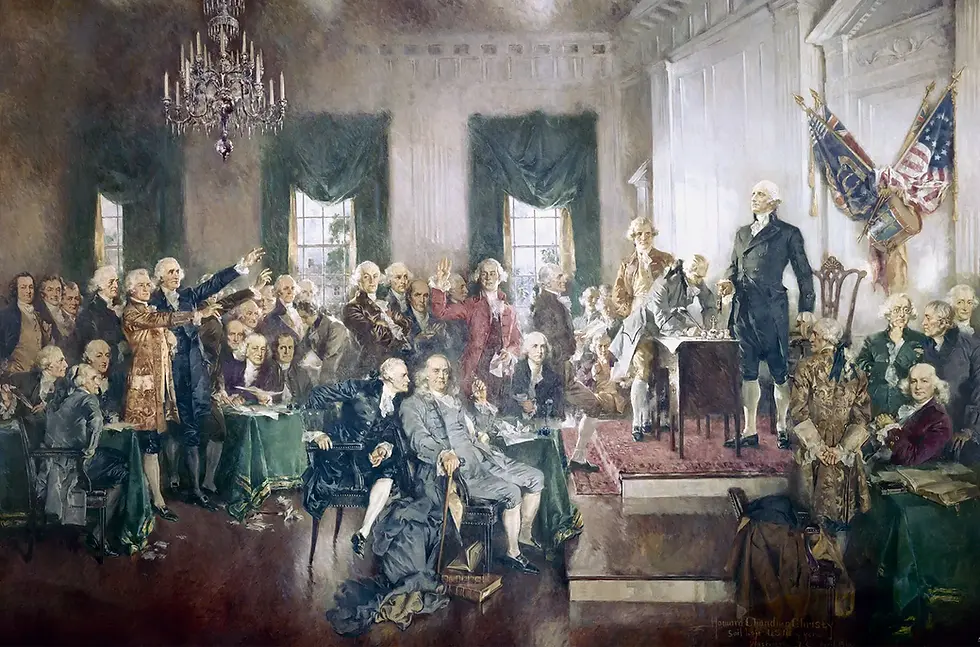
The Founding Fathers believed that free people had duties. They believed liberty required courage, virtue, discipline, and public responsibility. They were imperfect men, but they helped create something that gave future generations the opportunity to keep building, improving, and strengthening the country.
Preparedness is one way we practice that responsibility today.
When you prepare your home, you reduce the burden on emergency responders.
When you learn first aid, you may become the help someone needs before help arrives.
When you store supplies, you are less likely to become desperate during a crisis.
When you know your neighbors, your community becomes harder to break.
When you teach your children resilience, you pass on something more valuable than comfort.
This Independence Day, enjoy the fireworks. Enjoy the food, the family, the flags, and the celebration. Those things matter. But take a moment to remember the people who helped give this nation its beginning.
Remember Washington’s steadiness.
Remember Jefferson’s words.
Remember Knox’s preparation.
Remember Franklin’s warning.
And remember that the American experiment was never meant to be carried by government alone. It was meant to be carried by citizens who were willing to act with courage, responsibility, and care for one another.
Freedom is inherited.
Preparedness is how we help preserve it.


Comments